
Weaver’s Society Transitions to Sustainable Production Practices
Adopting circular and climate-conscious practices to meet market demands

Key Outcomes

Transition to certified organic cotton yarn
Adoption of safe VAT and natural dyes
Installation of a bio-based Effluent Treatment Plant (ETP)
Customers Responding Positively
Traditional Weavers Transition to International Sustainability Compliance
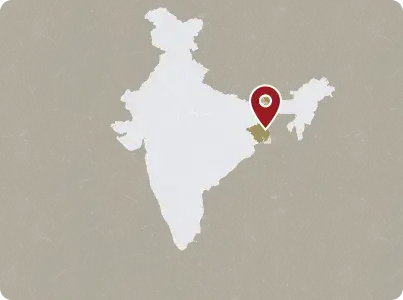
The Chakshimultala Chhandabrati Weavers Society, located in Midnapore, West Bengal, is a traditional handloom weaving collective known for its intricate cotton and silk fabrics. Despite its strong artisanal base, the society faced increasing pressure to comply with global sustainability and safety standards. The use of uncertified yarns and conventional chemical dyes posed barriers to accessing eco-conscious markets, while the absence of an effective effluent treatment system raised environmental concerns.
Through Sarba Shanti Ayog’s (SSA) sourcing facilitation and compliance support initiative, the Weavers Society received comprehensive guidance in transitioning to sustainable production practices. SSA assisted the group in identifying certified suppliers of organic cotton yarn, procuring safe VAT and natural dyes, and ensuring the use of non-toxic textile auxiliaries. Moreover, SSA’s technical team helped the Society identify credible vendors for setting up a bio-based Effluent Treatment Plant (ETP)—a critical step towards ensuring eco-friendly dyeing and wastewater management in compliance with environmental norms.
This intervention significantly strengthened the Society’s production ecosystem—reducing its ecological footprint, enhancing product safety, and aligning its operations with Fair Trade and international environmental standards. As a result, the Chakshimultala Chhandabrati Weavers Society is now better positioned to cater to sustainable textile markets, demonstrating how traditional weaving clusters can adopt circular and climate-conscious practices while safeguarding livelihoods and local heritage.
