Social enterprises sit in the middle of two worlds. On one side you have traditional business that focuses mainly on profit. On the other side you have charity that focuses mainly on welfare. A social enterprise holds both together. It uses business tools to solve social and environmental problems, and it commits to financial health so the impact can last.
If you are part of a craft community in India, this matters for a simple reason. You do not just need sympathy, you need steady orders, fair prices, better working conditions, and respect for your skills. Social enterprises are built exactly for that type of outcome.
What is a social enterprise?
A social enterprise is an organisation that:
- Has a clear social or environmental purpose, such as fair livelihoods for artisans or responsible use of natural resources.
- Runs trading activities, meaning it earns income by selling products or services, instead of depending only on donations.
- Reinvests a significant part of its surplus back into its mission, communities, and long term resilience.
- Operates with fair and transparent practices, especially in how it treats producers and workers.
In other words, the social goal is not a side note. It sits at the centre of every business decision, from design to pricing to whom you bring into the value chain.
How social enterprises differ from business and charity
Compared to traditional businesses
A traditional business usually asks, “How do we maximise profit for owners or shareholders?” A social enterprise asks, “How do we sustain the organisation while improving lives?” Profit becomes a tool, not the final goal. This often means slower growth, more patient decision making, and a focus on producer wellbeing.
Compared to charitable organisations
Charities mainly depend on grants and donations, and they often provide short term relief. Social enterprises build revenue models so communities can rely less on outside aid over time. For craft producers, that usually looks like consistent orders, capacity building, and support to reach markets instead of one time support.
If you want a deeper view of how this thinking shapes real programs in India, you can explore the initiatives described in SSA’s programs and projects, which follow this social enterprise logic in practice.
Why social enterprises matter for craft communities in India
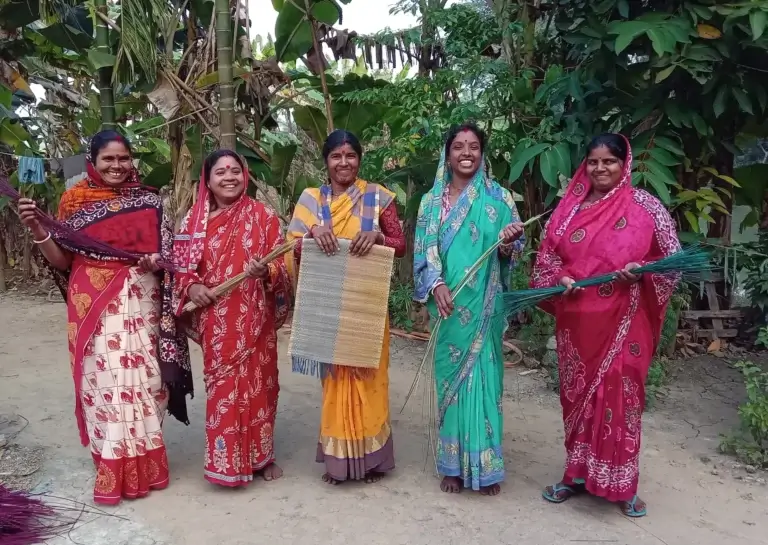
If you live from your craft, you already know the hard truth. Skill alone does not guarantee income. You can weave, stitch, carve, paint at a very high level, but without the right buyer, price, and support system, the work stays stuck in the village or sells for less than the cost of labour.
Social enterprises exist to close that gap. They connect artisan skill with fair and stable markets, and they do it in a way that respects you as a producer, not as a beneficiary.
1. Turning scattered buyers into steady markets
Most craft producers deal with irregular orders, middlemen, and last minute bargaining. A social enterprise treats your craft as part of a planned value chain. It usually:
- Aggregates products from many small producers, so buyers can place larger, consistent orders.
- Works with you on design updates that match current demand, without diluting your identity.
- Builds long term buyer relationships, so you are not chasing one time orders.
This is where fair trade focused initiatives, like the ones supported through structured fair trade programs, become useful. They help craft enterprises meet clear standards, speak the language of buyers, and still keep producer interests at the centre.
2. Keeping traditional skills alive with dignity
Many crafts survive in India, but not all survive with dignity. When younger people see their parents earn less than basic labour rates, they walk away from the loom or the workshop.
A social enterprise changes the equation. It treats traditional knowledge as core expertise, not a cheap hobby. That often looks like:
- Investing in skill upgradation that builds on what you already know.
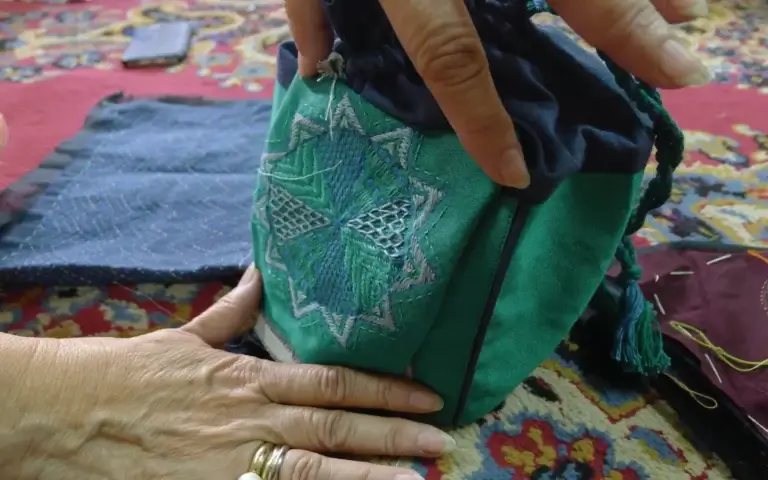
- Documenting techniques and designs, so they are recognised and can be presented with confidence to buyers.
- Positioning your craft as heritage with contemporary relevance, rather than low cost decoration.
3. Moving from survival income to reliable livelihoods
The real test is simple, does your craft work pay for food, education, health, and some savings. Social enterprises that take this seriously track fair costing, support access to social security schemes, and promote better working conditions, not just more orders.
When this approach links with services like financial inclusion and social protection programs, producers see a clear shift. The craft is no longer side income, it becomes a recognised livelihood with rights, safeguards, and a voice in decisions.
You bring the skill. A well designed social enterprise brings structure, markets, and respect so that skill turns into a stable, future facing livelihood.
How social enterprises support marginalized and grassroots producers
If you are a grassroots producer or part of a craft collective, you feel the pressure from every side, raw material costs, low prices, delayed payments, and limited say in decisions. A well designed social enterprise tackles these issues head on, using clear mechanisms that protect your interests and strengthen your bargaining power.
1. Fair trade practices that start at costing
Real fair trade begins with fair costing, not with a logo on a label. A committed social enterprise usually:
- Calculates true cost of production, including your time, overheads, and a margin that respects your skill.
- Agrees on prices transparently, so you know exactly how the selling price links to what you receive.
- Sets clear payment timelines, and sticks to them, so you can plan cash flow for your family and group.
If you want to go deeper into what fair trade standards look like in practice, you can review SSA’s fair trade compliance framework, which breaks these ideas into concrete processes.
2. Capacity building that respects existing knowledge
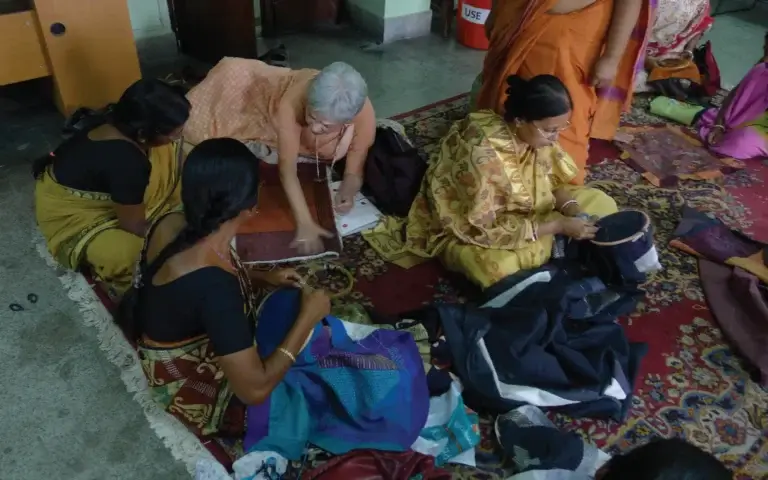
Many producers are tired of training that treats them like beginners. Social enterprises that know the craft sector start from what you already do well, then layer in skills that markets expect. That often covers:
- Product development and quality control, aligned with your craft identity.
- Basic costing, record keeping, and digital literacy, so you can track your own numbers.
- Leadership and organisational skills inside producer groups, so decisions do not sit with a single person.
SSA’s enterprise training and capacity building services follow this approach, working with producer groups as partners instead of passive trainees.
3. Building real community ownership
For many marginalised producers, the real shift happens when they move from “supplier” to “co owner” of the value chain. Social enterprises support this by:
- Encouraging producer collectives, cooperatives, or federations with clear governance rules.
- Involving producer representatives in pricing, order planning, and policy discussions.
- Ensuring profits or surpluses are shared or reinvested in community priorities such as tools, health, or education.
4. Creating inclusive and transparent supply chains
Marginalised groups are often the last to be seen and the first to be dropped when markets shift. A values driven social enterprise designs its supply chain to do the opposite. It:
- Maps every step from raw material to final buyer, so contributions from small producers remain visible.
- Prioritises long term contracts with producer groups rather than one off orders.
- Works with buyers who accept realistic timelines, fair pricing, and clear social commitments.
The outcome is simple and powerful. You gain predictable work, clear information, and a voice in how the craft economy grows around you, instead of standing at the edge waiting for the next order.
The role of social enterprises in sustainable and ethical craft production
If you work with natural fibres, dyes, metals, clay, or mixed materials, you already feel how closely craft is tied to the environment. When resources get more expensive or polluted, your costs go up and your quality suffers. A serious social enterprise treats sustainability as part of the production plan, not as decoration on a brochure.
1. Building environmental responsibility into the value chain
Responsible craft production starts with simple but firm choices. A values driven social enterprise usually puts clear checks in place at each stage of the value chain. You can use a framework like this with your own group:
- Raw materials, set criteria for preferred materials such as responsibly sourced fibres, sustainably harvested wood, or low impact metals, with [insert locally relevant material standard] as a reference.
- Dyes and finishes, adopt a checklist that ranks options from low impact to high impact, and commit to move at least [insert target proportion] of your production into low impact categories each production cycle.
- Waste and by products, map where offcuts, sludge, and packaging come from, then define [insert practical step] to reduce, reuse, or safely dispose of each category.
If you want structured support to think through these production choices, SSA’s capacity building services often integrate basic environmental management into artisan enterprise training.
2. Making ethical labor practices non negotiable
Sustainable craft is not only about materials, it is also about how people are treated. Ethical production becomes real when producer groups adopt clear internal standards. A practical template many social enterprises use covers:
- Safe working conditions, documented minimum requirements for space, lighting, ventilation, and handling of tools or chemicals, with [insert review frequency] for checking compliance.
- Responsible work hours, agreed limits on daily and weekly hours, and written norms for rush orders so health and family life are not sacrificed whenever a big buyer appears.
- Zero tolerance on child and forced labour, a simple policy all members sign, plus [insert monitoring method] that producer leaders can actually apply.
These internal rules often sit alongside fair trade expectations. SSA’s resources on fair trade certifications can help you translate broad principles into clear producer level practices.
3. Aligning with fair trade and eco friendly values
Fair trade focuses on dignity, transparency, and shared benefit. Eco friendly craft focuses on reduced harm to land, water, and air. A good social enterprise treats these as linked goals. You can align your collective using a simple three part lens:
- Product lens, ask, does this product reflect our community identity, fair pricing template, and material guidelines.
- Process lens, check, can we clearly show each step of production, who did the work, how they were paid, and what environmental safeguards applied.
- Partnership lens, review, do our buyers, suppliers, and service partners respect these same values, or do we need [insert boundary or condition] before working with them.
When you apply this lens consistently, sustainability stops feeling like an extra task. It becomes part of how you design, cost, and negotiate, and it positions your craft enterprise as a serious, fair trade aligned partner in the Indian market.
Ways Fair Trade Advocates and Consumers Can Engage with Social Enterprises
If you care about fair trade and craft livelihoods, you have more power than you think. Your buying choices, your voice, and your networks can all support social enterprises that stand with artisans and grassroots producers in India.
1. Buy with intention, not impulse
Every purchase is a signal. When you choose craft products from social enterprises, you reward fair pricing and transparent sourcing. A simple buying checklist you can use:
- Look for clear information on who made the product and where.
- Ask if producers were paid using a fair costing method that covers time, raw materials, and a margin.
- Prefer products that share care instructions and material details, it often reflects respect for both craft and customer.
If the seller cannot answer basic questions about artisans or working conditions, treat that as a warning sign.
2. Ask better questions in every marketplace
You do not need technical language to demand fairness. You only need consistent questions. For any craft purchase, online or offline, you can ask:
- Who are the producer groups behind this product.
- How are prices set, and what share goes back to artisans.
- What checks exist for safe working conditions and no child labour.
When more buyers ask these questions, traders feel pressure to partner with social enterprises that already follow these practices.
3. Use your networks to build visibility
Fair trade craft often loses out to mass produced goods simply because people do not know what to look for. You can change that with small, consistent actions:
- Share clear, factual stories about social enterprise craft on your social media or community groups.
- Introduce artisan led brands and producer collectives to your alumni networks, housing societies, or workplace forums.
- Invite social enterprises to stalls and exhibitions at local events, and ask organisers to keep fair trade criteria for vendors.
If you want structured ways to collaborate, explore the partnership options described on SSA’s partnership opportunities page.
4. Support advocacy for transparent supply chains
As a fair trade advocate, you can go beyond personal buying habits and push for clearer rules. Practical steps include:
- Encourage organisations you are part of to adopt simple supplier policies that favour artisan social enterprises.
- Join or start local discussions that link fair trade, gender justice, and environmental concerns in the craft sector.
- Use data and frameworks from experienced facilitators such as SSA’s advisory and services portfolio to inform your campaigns.
Your role is not to “save” artisans. Your role is to stand beside producer owned and fair trade aligned enterprises, so their commitment to justice and quality is rewarded every time money changes hands.
Challenges and opportunities for social enterprises in India
If you are building or working with a social enterprise in the craft sector, you already know it is not a smooth road. The model sits in between profit driven business and grant driven projects, so you face pressure from both sides. The good news is, the same issues that make this work hard in India also hold the biggest opportunities for growth.
1. Funding that matches the social enterprise model
Most social enterprises struggle to find financing that respects slower, impact focused growth. Typical challenges include:
- Short term project grants that do not give enough time to build stable markets or producer capacity.
- Commercial loans that expect quick returns, without space for community processes or fair trade commitments.
- Limited working capital to buy raw materials upfront, hold inventory, or manage long payment cycles from buyers.
A practical way forward is to design a mixed financing strategy. You can map which needs are best served through patient grants, which through social investors, and which through producer owned savings or credit groups. SSA’s experience with microenterprise finance, documented through its finance initiative programs, shows how layered capital can support both production and producer resilience.
2. Scaling without losing values or craft identity
Growth brings its own risks. When orders rise, many enterprises either dilute quality or shift away from the most marginalised producers because they are seen as “too slow”. The tension usually shows up in three areas:
- Quality control, keeping consistent standards across many small producer groups.
- Design integrity, adapting to market taste without turning every product into the same generic look.
- Governance, making sure producer voices remain central as teams and systems expand.
Here, standard operating procedures and producer led leadership training matter more than any branding exercise. You can use a simple scaling checklist that covers [insert production process], [insert governance step], and [insert market review step] before taking on larger orders.
3. Navigating compliance and fair trade expectations
As social enterprises grow, they meet more complex legal, tax, and certification requirements. Many grassroots groups feel intimidated and drop opportunities because of paperwork. Yet compliance can be turned into a strength if you treat it as a producer education process.
A structured approach looks like this:
- List all mandatory registrations and returns relevant to your sector.
- Translate each requirement into simple producer level practices and records.
- Assign clear roles inside the organisation for tracking, review, and external filings.
Support services such as SSA’s compliance support help social enterprises convert complex rules into manageable routines, which buyers and funders recognise as a sign of reliability.
4. Growing opportunity in domestic and fair trade markets
The opportunity side is strong. Interest in fair trade, ethical sourcing, and environmentally responsible craft is rising across Indian cities and among international buyers. For social enterprises rooted in craft communities, this translates into clear chances to:
- Develop producer owned brands that speak directly to conscious consumers.
- Use digital tools for storytelling, transparent pricing, and direct sales.
- Partner with organisations that value long term sourcing relationships instead of short term trend chasing.
If you align your pricing, production planning, and communication with these expectations, you can secure more predictable orders and better margins, without abandoning your social mission. The key is discipline, clear systems, and a firm commitment to producer first decision making.
Conclusion and Call to Action
You have seen how social enterprises sit at the intersection of fair trade, sustainable production, and dignified livelihoods for craft communities in India. They are not charity, and they are not profit at any cost. When they are designed well, they give artisans, home based workers, and small producer groups exactly what you keep asking for, fair costing, predictable work, safer conditions, and a real voice in decisions.
If you care about craft, you have a role in this ecosystem. It does not matter whether you are a producer, part of a craft community, a fair trade advocate, or a conscious buyer in a city. Your daily choices either support extractive supply chains or strengthen producer owned and fair trade aligned enterprises.
If you are a craft producer or community leader
Use the ideas in this guide as a checklist. Ask yourself, where do we already work like a social enterprise, and where do we still depend on ad hoc orders or charity style support. You can:
- Review your costing, payment practices, and group governance using the templates and lenses described above.
- Identify [insert priority area] where you need support, such as compliance, product development, or market access.
- Reach out to experienced facilitators like Sarba Shanti Ayog through their get involved page to explore training, advisory, or partnership options.
If you are a fair trade advocate or conscious consumer
Your strongest tools are your money, your questions, and your networks. Put them to work. Commit to:
- Buy from artisan enterprises that can explain their pricing, their producer relationships, and their labour standards.
- Ask sellers simple, consistent questions about who made the product and how they were treated.
- Share reliable information on fair trade craft and responsible sourcing, using resources from platforms such as SSA’s blog or similar knowledge spaces.
Nothing changes until people and organisations change how they trade. The good news is that you do not need grand gestures. You need steady, disciplined action. One contract that respects fair costing. One producer group that formalises its governance. One buyer who chooses a social enterprise partner and stays for the long term.
If you are ready to move from interest to action, start with a simple step in your own sphere. Review one purchase, one supplier relationship, or one producer collective you belong to, using the fair trade, sustainability, and social enterprise principles in this guide. Then take the next step, have the difficult conversation, or initiate the partnership. That is how a fairer craft economy in India actually gets built, decision by decision, with you as an active part of it.